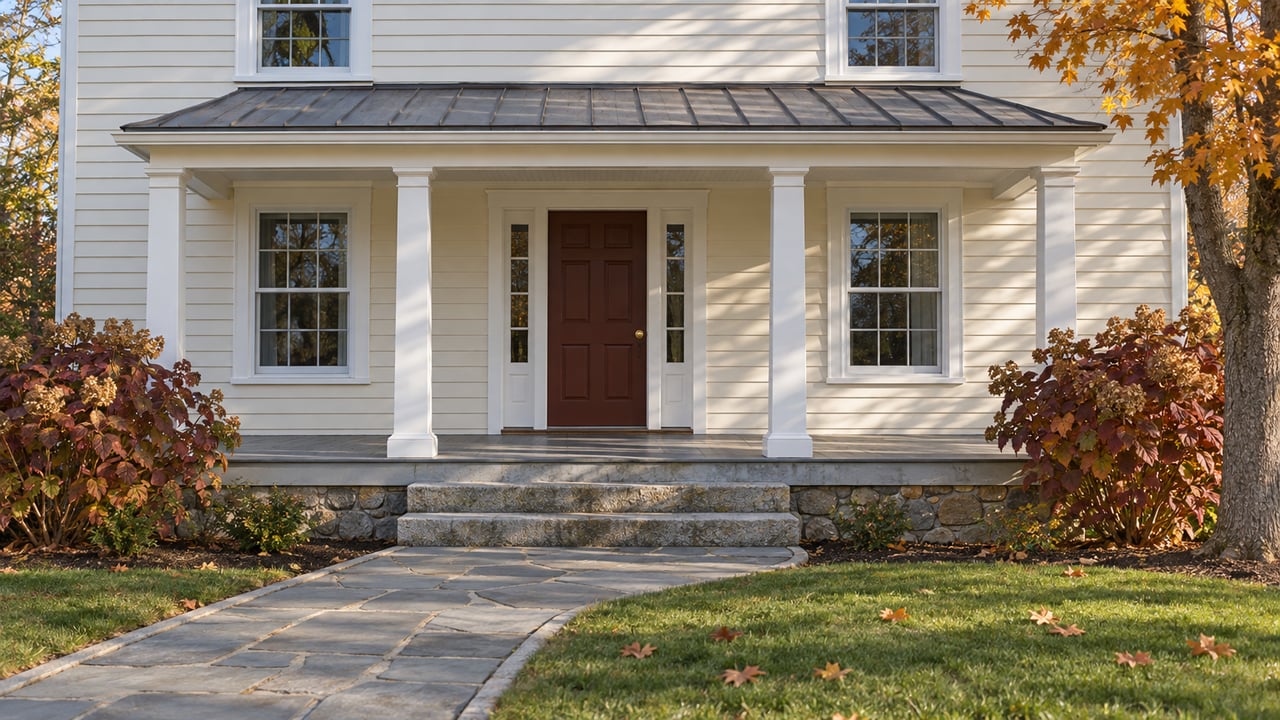
Woodbridge's Next Downsizing Option Is on the Old Golf Course, and It's Years Out
November 5, 2026
November 5, 2026
Woodbridge has 3,498 housing units, and 3,148 of them are single-family detached houses. That's about 90% of the town, according to the Census Bureau's 2024 American Community Survey five-year estimates. The same table estimates 84 units in single-unit attached structures, with a margin of error of plus or minus 78. A Woodbridge homeowner who wants a townhouse without leaving town is choosing from a very small group of buildings.
The town has put a timeline on fixing that, and the timeline runs through the former Country Club of Woodbridge. The Town's request for expressions of interest from developers closes on December 4, 2026, about three weeks after this post goes up. For anyone comparing towns or planning a move within Woodbridge, that date is the first of several approvals the new housing still has to clear.
Town officials have described the shortage themselves. On October 19, 2026, the Woodbridge Housing Commission discussed the solicitation. The meeting minutes record Chairman Dominick Thomas's reading of it this way:
"Dominick observed a heavy emphasis on senior housing, which is understood to be intended to appeal to local homeowners who currently have no downsizing options. Dominick noted that many former homeowners don't want to own any more."
The Town's written plans point the same way. Woodbridge's Affordable Housing Plan, updated by the Housing Committee on August 6, 2025, recommends encouraging smaller units for older residents who want to downsize and stay in town. It also connects the town's household growth to smaller senior and millennial households, which points to demand for smaller, lower-maintenance homes. The 2025 Plan of Conservation and Development implementation draft goes further. It calls for more smaller and age-restricted units, for age-restricted housing on town property, and for exploring senior co-housing or cooperative options.
Taken together, these documents show that Woodbridge's plan for smaller homes depends on land the Town owns. The private market hasn't produced that housing on a town map where nine of every ten homes are detached.
The Town bought the property in 2009 and kept the golf course running until 2016, according to the Country Club of Woodbridge master plan. The Hartford Courant reported a $7 million purchase price and said the Town bought the land to keep it from being developed. After that, the golf course failed financially, and the pool later closed.
The current solicitation, numbered 2027-01, seeks developers for two zones totaling roughly 25 to 30 acres of the 155-acre property. More than 115 acres would remain green space, parkland and trails. The zones follow the master plan, which the Town commissioned from a team led by Cooper Robertson, with Newman Architects on residential architecture and Langan on civil engineering and landscape architecture.
| Zone | What the master plan describes | Scale |
|---|---|---|
| Ansonia Road | Cottage-style senior homes | No more than 32 homes |
| Woodfield Road | Mix of residential, low-rise assisted living or multifamily, active-adult townhomes, and small-scale hospitality | Part of 25 total development acres |
| Remaining land | Trails, meadows, woods, water, and more densely forested land | 116 acres of parkland |
The plan's hospitality ideas include an inn, a restaurant or a brewery. It also suggests a history and nature pavilion and a heritage orchard or berry patch. The Courant's December 2025 coverage put the 32 age-restricted homes on seven acres at Ansonia Road and market residential and retail on 18 acres near the old clubhouse. In that article, First Selectman Mica Cardozo described the plan as a mix of age-restricted and market-value homes with an affordable-housing component, hospitality and recreation. He estimated that development on a quarter of the site could bring in $1.2 million to $1.9 million a year.
The master plan describes itself as a framework for implementation. It says it is not a development plan, and that no land-use changes follow automatically from it. Each of the following steps has to happen before anyone gets keys:
Residents have voted on this land before. A former selectman wrote in a Woodbridge Town News letter that a 2011 proposal went to referendum and was defeated by a wide margin. Cardozo said in 2025 that this round differs because the Town worked with consultants before going to developers, instead of starting with a developer's proposal.
The open questions will decide what kind of housing eventually gets built. At the October 19 meeting, according to Woodbridge Town Chronicle coverage, Housing Commission members asked how much flexibility developers would have to propose alternatives. Some asked whether the plan considers housing for younger residents, working households and people at different income levels. Thomas agreed to tell the First Selectman that the commission wants a larger role in reviewing the responses. The commission did not vote to reject or amend the solicitation. The commission also voted to post a housing survey on the Town website to gauge residents' interest in housing options.
Others have argued for a different scale. In a Woodbridge Town News letter last November, Selectman Andrea Urbano opposed the plan as presented. She described it as including about 300 market-rate units and a 100-unit assisted-living facility. Those figures are her reading of the plan and not commitments made in the plan itself. In April 2026, Menunkatuck Audubon president Dennis Riordan made the case in the Town Chronicle for keeping the property as open space. The 32-cottage limit at Ansonia Road is fixed in the plan. The size of the Woodfield Road zone is the part people are still debating.
The golf course isn't the only place smaller housing could come from. The Housing Commission's minutes note that the business district now allows a middle-housing option of two to nine units, adopted in response to the state's requirements for transit-oriented districts. Economic Development Commission Chairman Clifford Lynch wants more shoppers and more residents downtown and pointed to 245 Amity Road as an example of the kind of building the town has favored.
The streets are being planned at the same time. The Town's Business District Connectivity Project reached 60% design in July. It plans sidewalks, pedestrian and cycling routes, lighting, crosswalks and traffic calming, with groundbreaking expected in the first half of 2027. Cardozo has also asked the commissions to look into joining the Connecticut Municipal Development Authority, a state quasi-public agency that supports housing in walkable downtowns. That discussion was exploratory, and no decision to join has been made. This route depends on private owners choosing to build, so it moves at the market's pace and not on a solicitation calendar.
Statewide figures show what a downsizer gives up by waiting. In August 2026, Connecticut's median single-family sale price was $490,000, and the median townhouse or condo sold for $310,000, according to Connecticut REALTORS. Condo and townhouse inventory statewide was 1,865 units in August 2026, up from 1,552 a year earlier.
Across Connecticut, then, there is a wide price gap between detached houses and attached homes, and more attached inventory to choose from than last year. Very little of that inventory is in Woodbridge. A Woodbridge owner who wants to sell a house and buy something smaller this year will most likely be shopping in another town. An owner who wants to stay in Woodbridge is waiting on the approvals listed above, and on a cap of 32 cottages at Ansonia Road. Buyers comparing Woodbridge with nearby towns should also expect the town's single-family character to change slowly. The master plan keeps 116 of 155 acres as parkland, so the new homes would sit alongside that open space.
When do developer submissions close? December 4, 2026, at 11:59 p.m., according to the Town's bid posting.
How much of the golf course would be developed? Roughly 25 to 30 acres of 155, in the Ansonia Road and Woodfield Road zones.
Does closing the solicitation mean construction is approved? No. The master plan says it makes no zoning changes, and the Courant reported that a sale or lease would need a town meeting vote.
If you own a house in Woodbridge and are deciding whether to wait for the Country Club housing or move sooner, the first thing to pin down is what your current home is worth. The Urban Team can prepare a free home valuation and help you plan your timing around the approval dates above.
Stay up to date on the latest real estate trends.
Providing strategic guidance in city real estate, ensuring every client finds a home that fits both needs and dreams, while navigating the market with confidence, insight, and a focus on long-term satisfaction.