Hamden vs New Haven for Your First Home Search
July 23, 2026
July 23, 2026
Buying your first home often starts with one big question: where will your day-to-day life work best? If you are choosing between Hamden and New Haven, you are not just comparing prices. You are comparing housing types, commute patterns, property taxes, and the kind of routine you want once you move in. This guide will help you weigh those factors clearly so you can make a confident first-home decision. Let’s dive in.
Hamden and New Haven are part of the same local housing market, but they tend to offer different first-time buyer experiences. Hamden has 25,639 housing units, with 62% owner occupancy and 61% single-unit structures. New Haven has 61,203 housing units, with 70% renter occupancy and 71% multi-unit structures.
For you as a buyer, that difference matters. Hamden generally leans more toward detached homes and ownership-oriented housing. New Haven gives you more condos, smaller multi-family buildings, and mixed-use urban options.
Hamden’s housing stock is relatively older, with a median year built in the 1960s, and more than half of homes were built before 1969. About 56.53% of housing units are single-family, while 37.94% are multifamily.
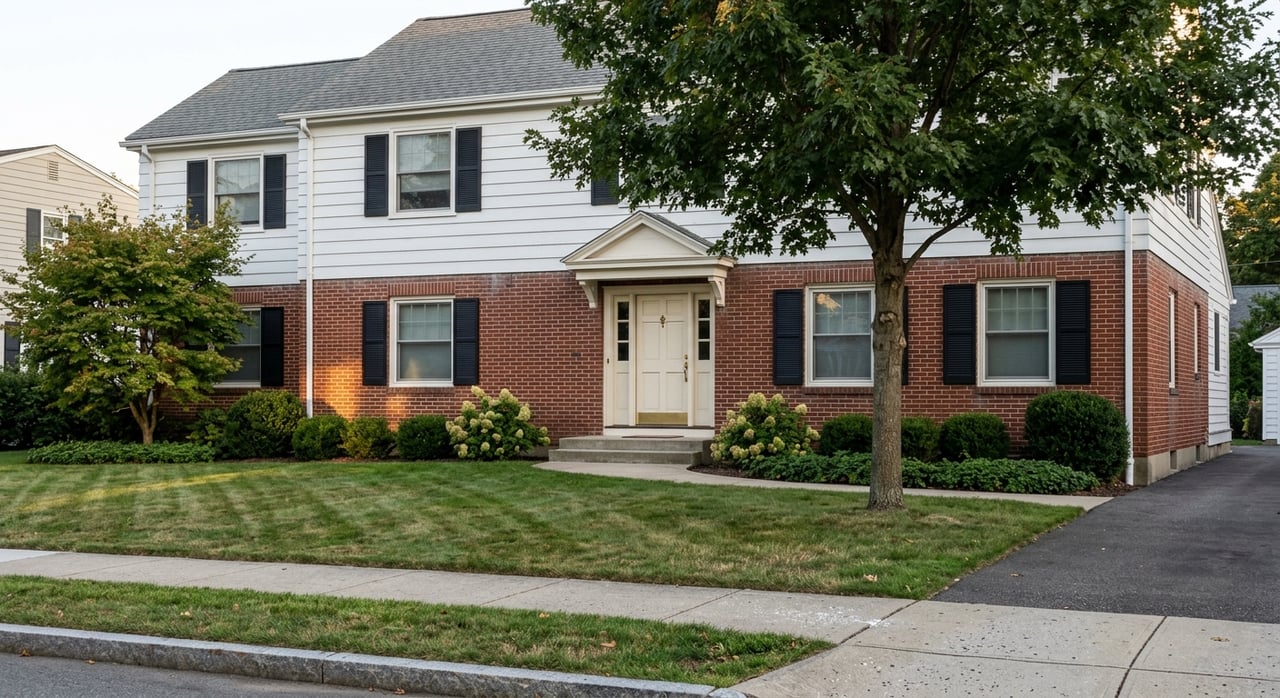
That usually means your search in Hamden may turn up more traditional detached homes and residential blocks with a quieter feel. If your first-home goal includes a yard, a more suburban layout, or a house that feels separate from neighboring units, Hamden may line up better with your wish list.
New Haven’s current housing report shows a broader mix of housing types. About 19% of the housing stock is detached homes, 5% is attached homes, 44% is in two-to-four-unit buildings, 13% is in five-to-19-unit buildings, and 20% is in buildings with 20 or more units.
The city has also added more than 2,500 units since the 2020 Census, much of it in downtown, mixed-use, transit-oriented projects. For first-time buyers, that creates more entry points if you are open to a condo, co-op style living, or a smaller multi-family property where you could live in one unit and rent another.
At first glance, current listing prices make the two markets look fairly close. Hamden has a median listing price of $385,000, while New Haven has a median listing price of $350,000.
But the spread within each market tells a more useful story. New Haven has a wide range, from about $155,000 in Quinnipiac Meadows to $795,000 in East Rock. Hamden’s ZIP-level medians are more tightly grouped, with about $339,945 in 06514, $419,450 in 06518, and $430,000 in 06517.
That means New Haven may give you more flexibility if your budget is either lower or significantly higher. Hamden, by comparison, tends to cluster more in the mid-to-high $300,000s and low $400,000s.
This is where many first-time buyers need to slow down and run the numbers. Hamden’s 2025 mill rate is 51.88, while New Haven’s 2025 grand-list mill rate for real estate and personal property is 39.962.
So even if a home in one location has a lower sticker price, your monthly payment may not end up lower once taxes are included. If you are comparing a Hamden house to a New Haven condo or two-family, looking at purchase price alone can give you an incomplete picture.
Both Hamden and New Haven are currently competitive seller’s markets. Homes in both places are selling at about 101% of list price.
Median days on market are also relatively close, with 26 days in Hamden and 35 days in New Haven. In practical terms, that means you should be ready for competition in either market, especially if a property is well-priced and fits a common first-time buyer budget.
For you, preparation matters. Knowing your financing range, understanding your non-negotiables, and moving quickly when the right fit appears can make a real difference in both towns.
Your daily routine may end up mattering more than the number of bedrooms. Hamden’s mean travel time to work is 21.8 minutes, compared with 25.8 minutes in New Haven.
But the way people get around looks different. In Hamden, 66% of commuters drive alone and 4% use public transit. In New Haven, 55% drive alone, 8% use public transit, 16% walk, and 10% work from home.
If you want rail access or a more transit-oriented setup, New Haven has the stronger hub. Union Station serves as an intermodal center with Amtrak, Metro-North, and bus connections, and both Shore Line East and the New Haven Line stop at Union Station and State Street.
CTtransit also connects the two communities. Route 228 runs through New Haven, Hamden, and Cheshire, and Route 229 connects New Haven and Waterbury through Hamden corridors.
If your routine is built around driving, Hamden may feel more straightforward. Its commute profile is more car-dependent, and that can suit buyers who want a detached home and expect to travel mainly by car for work, errands, and recreation.
If you prefer to mix walking, bus access, rail trips, and city convenience into your week, New Haven may feel more natural for how you live now.
New Haven is the denser and more urban option. The city says 17% of its 21.2 square miles are parks, and it manages more than 2,200 acres, including East Rock, Lighthouse Point, Edgewood, and West River.
The city also describes Downtown and the Ninth Square as walkable areas with shops, restaurants, and arts, with more regional shopping beyond downtown. If you want your routine to include walking to destinations and having more housing mixed into a city environment, New Haven may be the better fit.
Hamden’s amenity profile is more park-and-trail oriented. The town highlights Sleeping Giant State Park, Brooksvale Park, the Farmington Canal Heritage Trail, the Quinnipiac Trail, and Hamden Plaza.
For some first-time buyers, that feels like the right balance. You may prefer easier access to hiking, larger green spaces, and a more residential setting, even if that means relying more on your car.
Before you decide between Hamden and New Haven, it helps to compare the same factors side by side. These questions can keep your search grounded in what matters most to you:
These are the kinds of questions that can turn a broad search into a smart one. The best first home is not just the one you can buy. It is the one that fits your budget, your routine, and your next few years.
If you are still torn, try this simple framework. Start with your monthly payment ceiling, including taxes. Then rank your top three lifestyle needs, such as walkability, outdoor access, housing type, or commute convenience.
From there, compare actual listings in both places instead of relying on assumptions. A condo in New Haven and a detached home in Hamden may land at very different monthly costs, upkeep levels, and resale paths, even when the list prices seem similar.
The main takeaway is simple: Hamden usually gives first-time buyers more detached-home and ownership-oriented inventory, while New Haven offers more multifamily, transit-oriented, and lifestyle-diverse options. Because Hamden’s mill rate is higher, the affordability gap is often smaller than headline prices suggest.
If you want help sorting through those tradeoffs in a practical, neighborhood-specific way, DiDi Strode can help you compare options in New Haven, Hamden, and nearby towns with a clear plan.
Stay up to date on the latest real estate trends.
Providing strategic guidance in city real estate, ensuring every client finds a home that fits both needs and dreams, while navigating the market with confidence, insight, and a focus on long-term satisfaction.